Exhibition ‘The Gearwheel, Hardworking Hands, and the Tired Exhibition Visitor’ at Editorial, Vilnius
“Many demands come from the client’s side. A poor artist is forced to lie for a piece of bread. And then he begins to polish and smooth out his painting, to paint glossy eyes, smiling lips, softly pink faces and hands…” wrote Petras Kalpokas in his unpublished text A Few Words About Myself. In it, the artist openly reflects on the compromises often dictated by the market: “…through such cheap-effect portraits many gifted and talented artists have already been ruined. The artist becomes accustomed to it, corrupts the gesture of the brush, turns into a formulaic painter. He earns a lot of money, lives well, but as an artist he is ruined — like a person who has sold his conscience.”
Before the establishment of the Lithuanian Artists’ Association, the position of artists in Lithuania remained uncertain — there was no clearly defined professional status, and state support for art was minimal. According to G. Žalkauskaitė (2024), the cultural maturity of society developed slowly until the mid-1930s. In 1935, Paulius Galaunė wrote in the press about the gap between artists and society:
“It is hardly possible to appeal to today’s society with advice that it should buy works by our artists and support them materially… all that is asked of it is that it at least take an interest in art and attend exhibitions.”
Kalpokas also felt misunderstood within Lithuania’s provincial and conservative environment. As noted by Nijolė Tumėnienė (2021), the artist was disappointed both by the limited understanding of art among private patrons and by the constant criticism directed at the teaching methods of the Kaunas Art School. Nevertheless, as a well-known portraitist and fresco painter, Kalpokas received many commissions that allowed him to live entirely from his artistic practice. At the same time, the artist was no stranger to the need for retreat — he would occasionally escape the heavily drinking bohemian environment of Lithuania to Italy, Germany, Palanga, or Nida.
In 1929, together with Olga Dubeneckienė, Kalpokas began building a house in the Žaliakalnis district of Kaunas — a shared project of domestic life and artistic work. This required additional income, leading the artist to take on both private and official commissions. One of the most significant was the series of three frescoes painted in 1938 for the Chamber of Commerce, Industry and Crafts, including the monumental fresco Labour, symbolizing Lithuania’s economic strength and modernity.
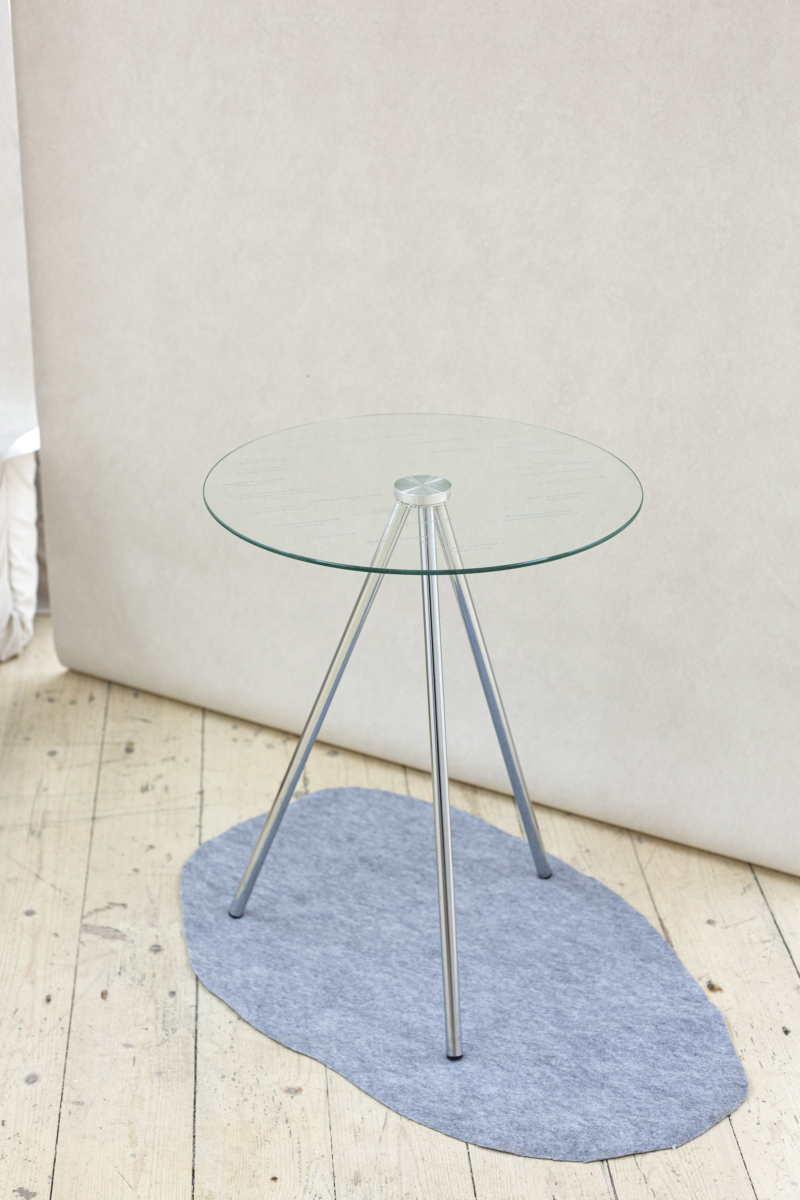
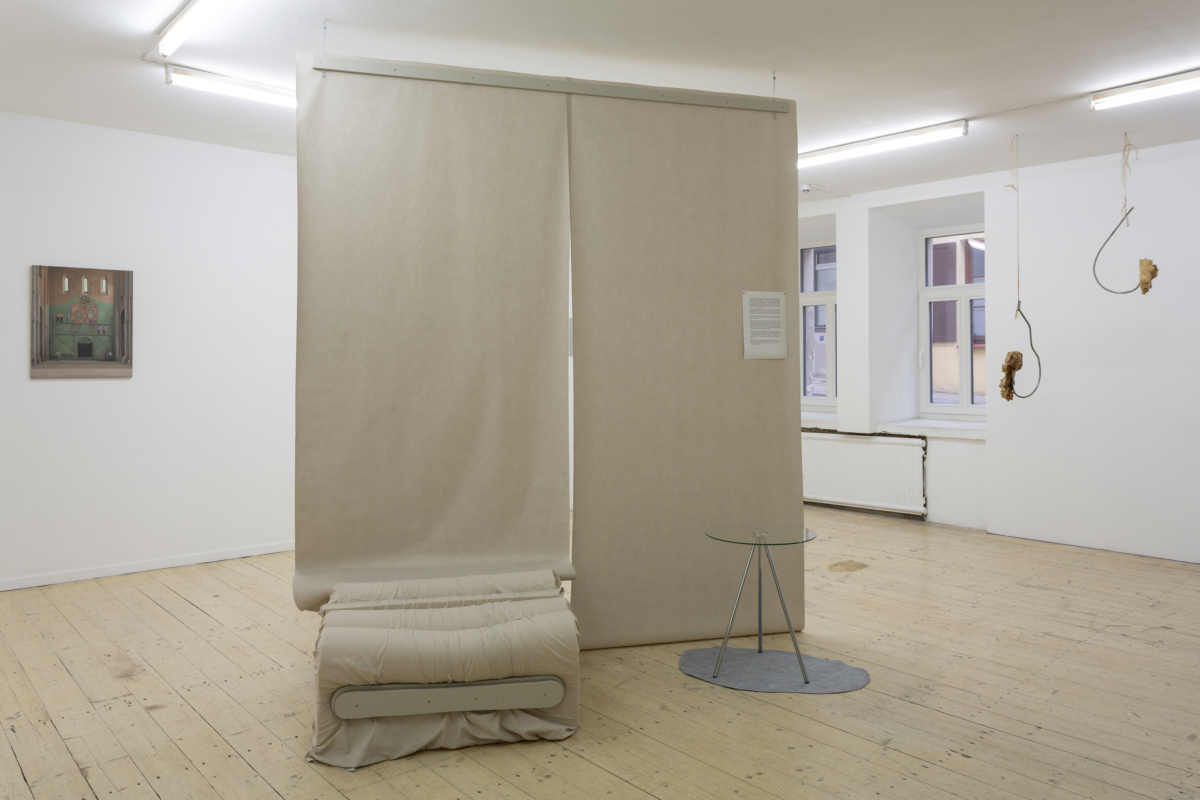
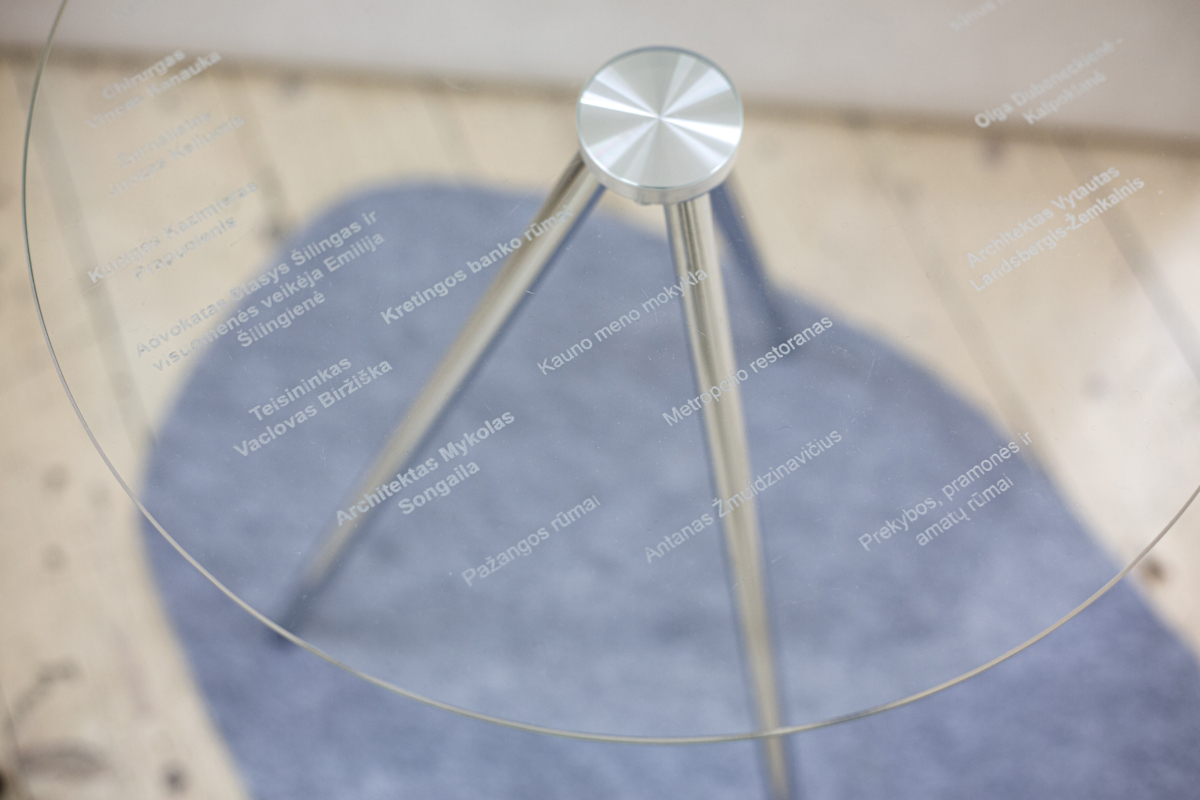
If the cogwheel in this fresco conveys a vision of the modern state, then the map engraved in glass and supported by three metal rods becomes a symbolic image of Petras Kalpokas’s own survival scenario — one in which artistic creation, the market, and state cultural policy are constantly being negotiated.
The Gearwheel, Hardworking Hands, and the Tired Exhibition Visitor
Artists: Agnė Bagdžiūnaitė and Petras Kalpokas, Irena Haiduk, Morta Jonynaitė, Tomasz Kobialka, Ieva Rižė, and Șerban Savu
Curator: Vaida Stepanovaitė
Dates: 2025.09.11 – 10.31
Venue: Editorial (Latako str. 3, Vilnius)
Photography: Editorial

